Mar '26
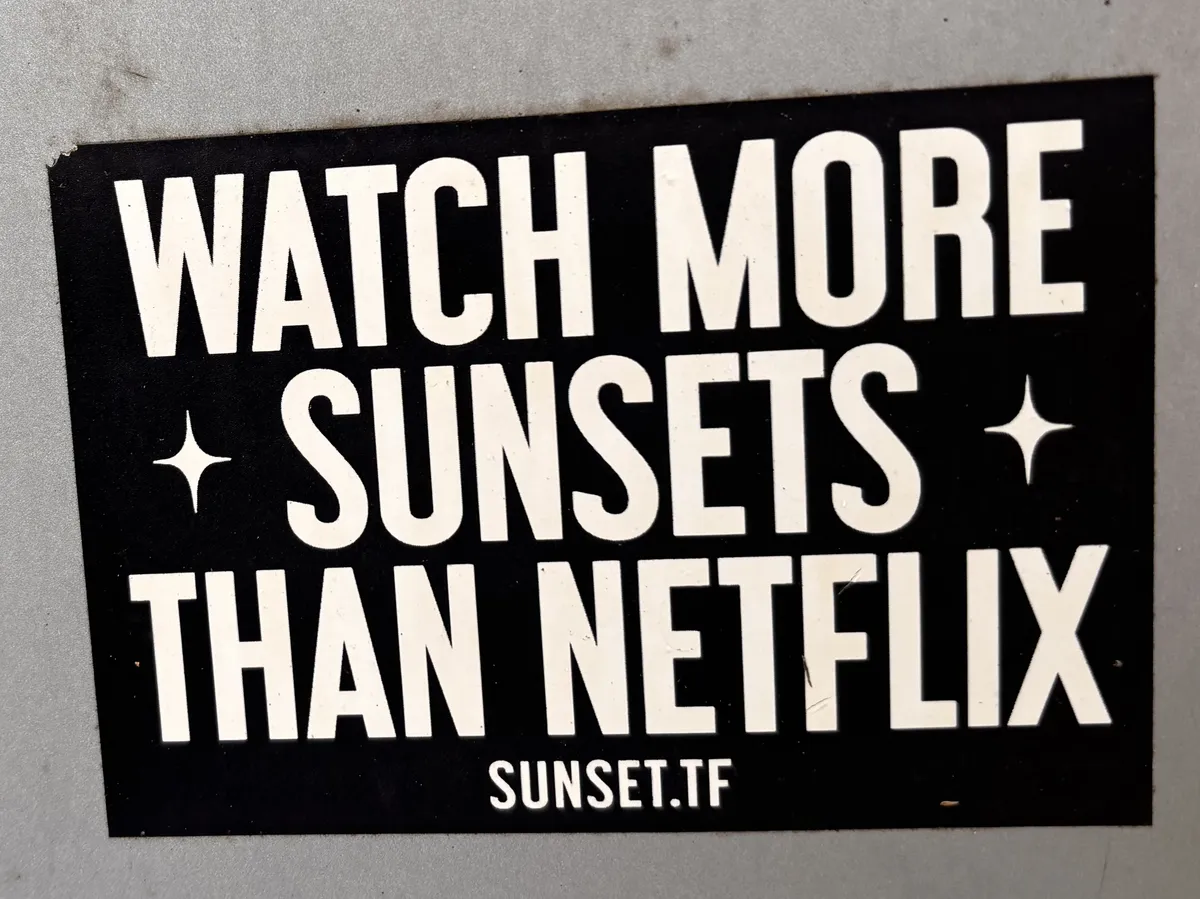
The remarkable thing about television is that it permits several million people to laugh at the same joke and still feel lonely.
— T.S. Eliot, 1963

Thou shalt not make a machine in the likeness of a human mind.
— Dune, Frank Herbert, 1965
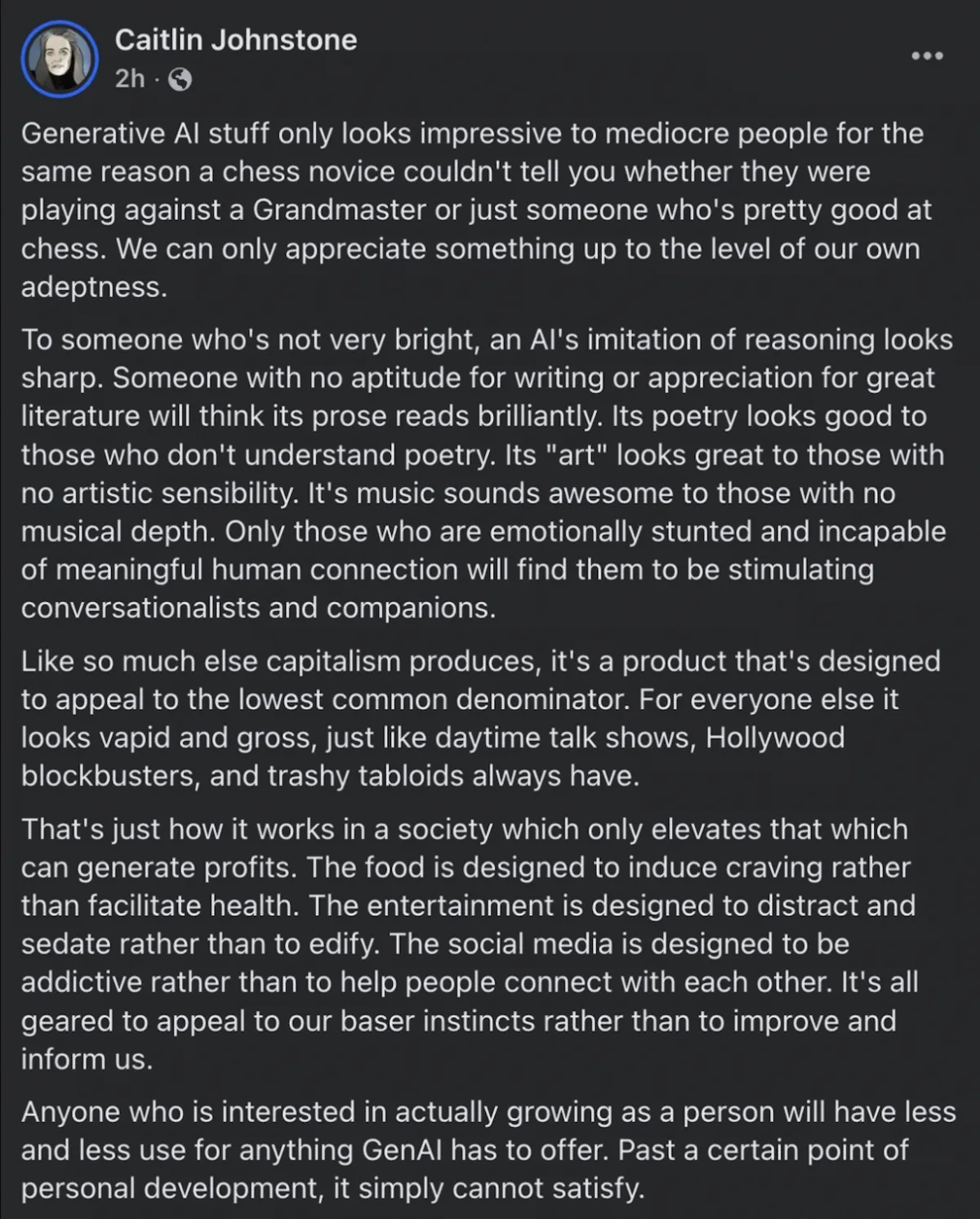
An interesting rumination on literacy and AI by Jan Mullen:
We seem to be grieving literacy in public lately. Neuroscientists show how the “reading brain” strains in digital environments; cultural critics trace how ubiquitous computation reshapes attention; educators grapple with pedagogical controversies and students’ dwindling stamina with text. Each week, new evidence.
To defend literacy, we need to understand what it is, how it took root, and why it now seems so endangered. The following four dimensions of this broader ecological story remain largely absent from today’s conversation. Yet they are essential for understanding both the predicament we face and the possibilities still available to us:
#1: Writing began as a tool of state control. It was a solution to an administrative problem: how to coordinate labor, track obligations, and render a population visible—and therefore governable—to a central authority.
#2: Mass literacy required centuries of redesign and struggle. To realize this potential required advances in material and institutional support: the invention of printing, the spread of public education, and coordinated campaigns for basic literacy.
#3: The reading brain is an “unnatural,” fragile achievement. It depends on sustained, large-scale societal investment in both cultivation and maintenance. It is a complex cognitive adaptation—difficult to build, easy to displace.
#4: AI is making people legible to a new system of power. Along with its data-harvesting ecosystems it now tracks, tags, and parses human behavior with unprecedented reach. As with writing in the early state, the system is largely opaque to those it governs: it reads us, but we do not easily read it.
We are selecting for affordances, but should be selecting for effects. These effects include recursive empathy, long-horizon abstraction, disciplined counterfactual reasoning, interiority, and the capacity to entertain multiple perspectives over time.
AI is externalizing attention, just as writing externalized memory. It models it, redirects it, and applies it at scale. In the hands of the few, large-scale behavioral modeling could begin to function as a form of ambient governance: a one-way mirror that interprets our impulses while offering little in return.

Interesting thoughts from Robin Sloan on the bounds of technology, the internet, and its latest incarnation: AI.
“Magic circle” is a term drawn from the study of games. games unfold in a special space, physical and/or intellectual, marked off ahead of time, in which the set of possible actions is constrained.
What is the magic circle of AI? It’s the same as the magic circle of computation, which is: symbols in, symbols out. Supremely flexible, yet narrow and stingy. Inside its magic circle, anything can become anything else . It’s easy to overestimate the scope of computation, because it has become so prominent in day-to-day life. Yet the view through a drinking straw would seem substantial, too, if you spent all your time looking through it.
Here’s a simple observation: The world can run without an internet. The internet can’t run without a world. Software cannot, in fact, eat this world. Software can reflect it; encroach upon it; more than anything, distract us from it. But the real physical world is indigestible.
Consider the printer! There’s a reason they are the eternal bane of computer users. It’s because, in most systems, they are the bridge between the digital and the physical: the place where a stream of symbols collides with dust, moisture, friction, obstruction … welcome to the real world!
If indeed AI automation does not flood fill the physical world, it will be because the humble paper jam stood in its way.
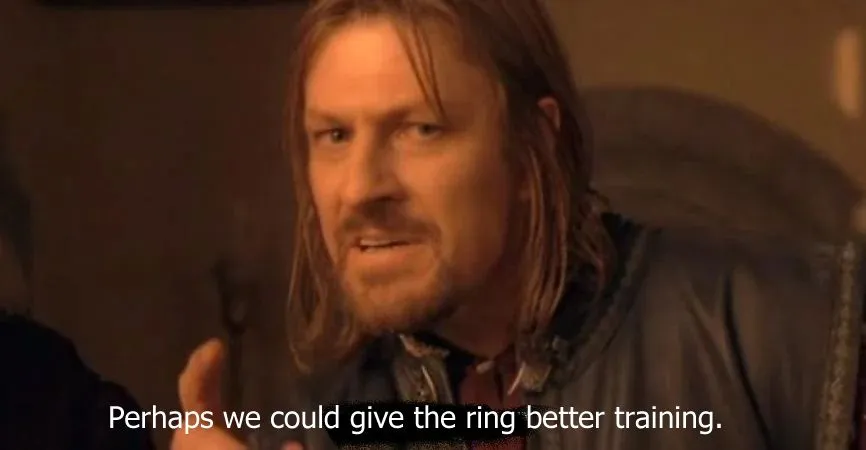
The AI industry’s underlying business model is concerning. At every layer, the technology appears to decrease the value of its assets. The advanced AI chips that make up the majority of the cost of a data center? Their value rapidly decreases as they are superseded by the next generation of chips, meaning that the ultimate backstop for all data-center debt—selling the data center itself—is not actually a backstop. The way that AI companies make money when people use their products is also deflationary. OpenAI, Anthropic, and others charge users for using “tokens,” the components of words processed by their bots. This means that tokens are an industrial commodity akin to, say, crude oil or steel. But unlike other commodities, the cost of each token is rapidly decreasing owing to advancements in AI’s capabilities. Kedrosky called this “a death spiral to zero.” As the value of a token plummets, the value of what data centers can produce also falls. Finally, the main draw of AI tools is “efficiency”: Rather than growing their overall output and the opportunities available to people, executives are hoping that AI will allow them to make cuts to their business operations. The medium-term success of generative AI would likely involve millions of people being put out of work.
— Matteo Wong and Charlie Warzel

I’m sure I could use AI to make myself various kinds of digital tools, but I personally would much rather buy them from the people who made them. I could use coupons to obtain polyester clothes from Temu if I didn’t give a shit about anything, and I tend to put “vibe coding” in the same bucket. I’m done.
There was a time where I had a window on the world. And then the platforms and tools that provided it ceased interoperability, became locked rooms, and were given to robots to run. By 2018, the joy and utility of these new tools were gone. And the people who achieved that are the same people who want to shove “AI” into our lives. I am tired of people somehow thinking this time will be different: that this time we will all be gifted the magical tool that will change our lives and neither it nor we will be fucked over next week by its actual owners.
— Warren Ellis